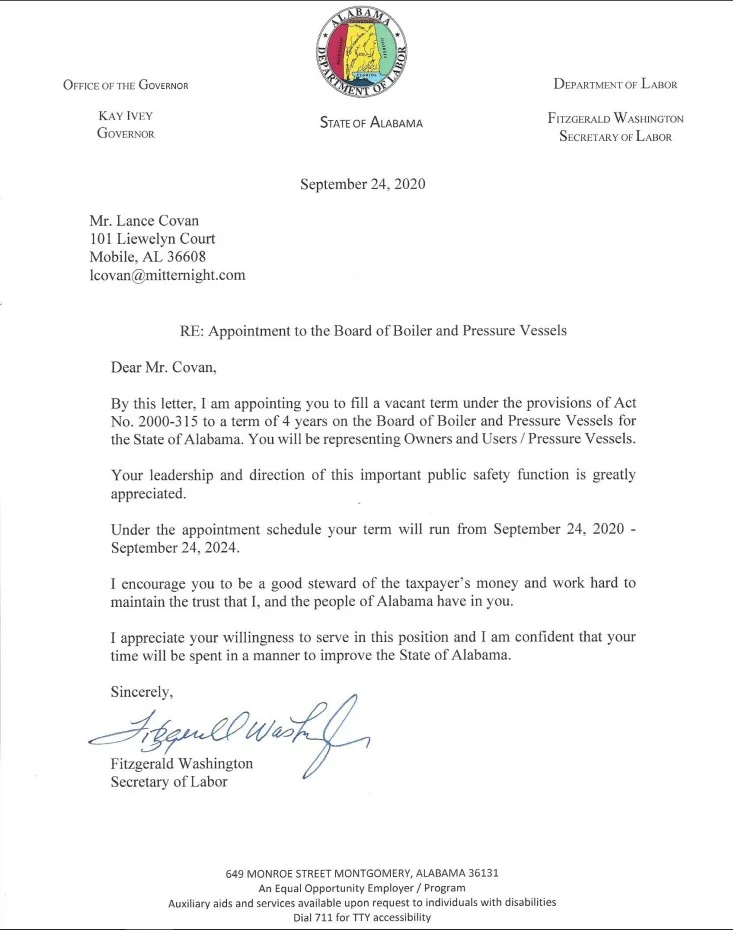
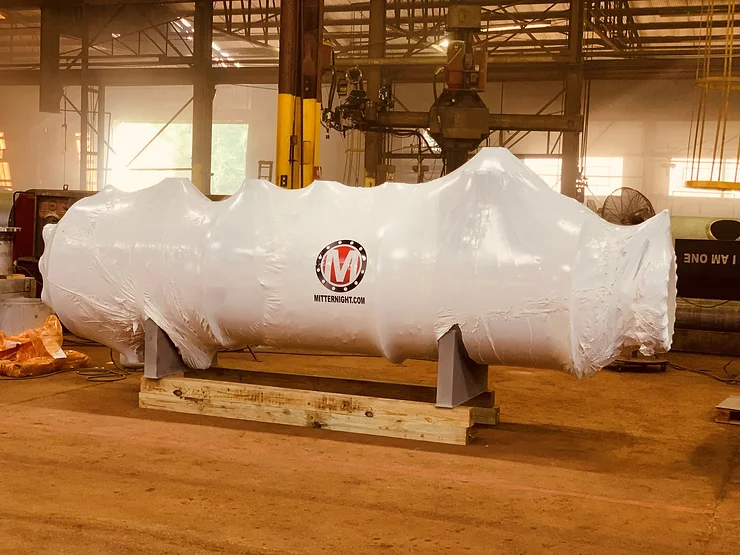
Feeling incredibly honored to join the groundbreaking journey of the new Direct Air Capture Hub project in Mobile County, Alabama. The opportunity to contribute towards innovative climate solutions is a privilege. Let’s harness technology for a greener tomorrow! #ClimateAction#Innovation#DACHub#MobileAlabama
For decades, the world’s great powers have been in a race to develop nuclear fusion, and advances in technology have progressed us closer than ever to achieving this process once thought to be only in science fiction novels.
As part of a $1.15 million Small Business Innovation Research (SBIR) grant awarded to KVA Stainless by the U.S. Department of Energy, Mitternight Industries announced a partnership with KVA Stainless. This partnership will collaborate to develop a new welding process for the U.S. Department of Energy’s continued research and development efforts towards clean and sustainable energy.
Mitternight Industries will provide design engineering and fabrication of the prototype reactor which will implement KVA Stainless’ integrated welding and thermal processing procedures. This SBIR project will develop integrated joining methods to enable fabrication of complex structures while maintaining required dimensional accuracy, material and physical properties. The 24-month project is scheduled to commence in Q4 of 2021 with plans for a working prototype to be complete by Q1 of 2023.
“A fusion reactor’s structural components must withstand extreme heat, radiation and temperature which is why it’s critical to develop procedures that mitigate against metallurgical strength degradation due to these harsh conditions,” said Lance Covan, chief executive officer and chairman of the board of Mitternight. “We congratulate KVA on being awarded this grant by the U.S. DOE and are excited to be their partner in this project. For decades, the world’s great powers have been in a race to develop nuclear fusion, and advances in technology have progressed us closer than ever to achieving this process once thought to be only in science fiction novels.”
About Mitternight
Founded in 1927, Mitternight Industries is a comprehensive industrial solution provider and manufacturer of ASME code vessels including heat exchangers, chemical reactors, distillation columns and other pressure vessels, utilizing materials ranging from carbon steel to titanium. Mitternight’s unique, market-based approach of self-performed services which include EPC operations, original equipment manufacturing (OEM) fabrication and construction, and field services have propelled Mitternight to be a recognized turnkey solution provider for many of most sophisticated projects for Fortune 500 customers around the world.
SATSUMA, Alabama — Some three years after taking over the company, the owners of Mitternight have already dipped into the global market to sell its complex industrial equipment. Last week, Governor Robert Bentley recognized the Satsuma-based company for its excellence in international trade.
Mitternight Inc., a manufacturer of ASME-code vessels, including heat exchangers, chemical reactors, distillation columns and other pressure vessels, utilizing materials ranging from carbon steel to titanium, is pictured Monday, Feb. 13, 2012, in Satsuma, Ala.
“If you have an operating company that has some sort of exposure to the international market, you can spread your risk out at the macro level from what’s just going on in the continental U.S.,” Covan said.
The road to get there seemed a natural one, said Lance Covan, a partner and chairman of the board for the company.
Their work often involves building intricate pressure vessels for petrochemical, oil and gas companies. Its equipment, mainly heat exchangers, distillation columns, boilers and agitators have been exported to Saudi Arabia, Brazil, China and Mexico.
They’ve continued to build on the good name of the company first founded in 1927, now as the builder of choice for companies like DuPont, Dow Chemical and Royal Dutch Shell. Total employees hover around 100 at its 18-acre campus.
Covan purchased Mitternight with CEO Todd Burkhalter in 2010. The company “had distinguished itself a little bit with trying to create the infrastructure of an exporting business,” Covan said. But they saw the potential for more.
When the bought the company, he knew its reputation was solid, but needed some changes in the areas of process and safety. Within the first two years, Covan said they had applied for a license to export to China.
“Getting the Chinese export license was probably one of the key indicators to the market, meaning our customer base, that we are serious about being in the exporting game,” Covan said.
But most of the success can be ascribed to the patronage of their two largest buyers, Dow and DuPont, Covan said. “Partnering with those guys makes it a lot easier and less risky for us entering those waters because they are already there,” he said. “We’ve been entered into the equation because our big customers are asking us.”
Now they are looking into providing field support for some of the equipment they build, sending employees to off-site locations.
Covan said they plan to start with in the country, but that too, could also quickly expand abroad.
“I think the lesson there is if you have a big customer, step and show them you’re interested in the international market,” Covan said, “because they are looking for people who have got the moxie to do those kinds of deals.”
Chemical, oil & gas refinery and petrochemical facilities use complex processing vessels such as heat exchangers, chemical reactors, distillation columns, and pressure equipment that operate under extremely intense environments.
These vessels must endure high temperatures and high pressure over decades of grueling use. They are critical pieces of operating equipment that often function as the central processing units of an entire manufacturing facility. As a result, any equipment downtime can be extremely costly to the operator.
Supporting the many industries that depend on these high-performance vessels is a marketplace of equipment designers and engineers, specialized in metallurgy, vessel fabricators, maintenance and repair services, advanced product testing technologies and certification and accreditation organizations. Given the performance and safety requirements for a complex processing vessel, leading fabricators certify their vessels with the American Society of Mechanical Engineers (ASME) to indicate that their products fulfill the requirements of relevant ASME codes and standards.
Ninety-five years ago, the roots of the complex processing vessel sector started with boiler manufacture and repair shops and has now grown to include off-the-shelf heat exchanger and pressure vessel fabricators and highly sophisticated and credentialed design and manufacturing specialists. These specialist fabricators work with customers to design, engineer, manufacture, and test ASME Division I and II code vessels of every size, material, and finish including rare and challenging alloys selected for their superior performance and durability.
One of the challenges facing industries that require specialized complex processing vessels is the relatively small number of these specialist fabricators. There are still relatively few worldwide who provide the in-house design and engineering expertise to craft vessels that can withstand high intensity environments.
Manufacturing processes that involve high temperatures and high pressures require equipment that is constructed from specialized alloys and that are custom-designed to the operator’s unique needs. Far from off-the-shelf, clients often turn to a specialist fabricator to design custom equipment based on a profile of their operating criteria. The fabricator then needs to create a design, engineer, manufacture and test to ASME codes.
Tate & Lyle is a UK-based global supplier of ingredients to food and beverage markets, including North America. When constructing their plant in McIntosh, AL, it required custom-designed distillation columns, pressure vessels and heat exchangers. Because of high operating temperatures and pressure, specialized solutions were required for performance and durability. Moreover, the company needed equipment that could run 24/7 with only two shutdowns a year.
Testing a fabricated vessel at Mitternight
At the time, the engineering team only provided a fabricator with a data sheet of the requirements – things like how many gallons for the vessels, operating temperatures, pressure levels, and how many nozzles were needed. From there, we needed the vendor to come up with the equipment design and be able to build it to ASME Section VIII Div. 1 code,” says Linda Rutherford, a member of the Quality Control department at Tate & Lyle. “Because of the criticality of the equipment to our manufacturing process, we needed equipment that would not break down and stand the test of time. And at this plant, we measure durability in decades.”
Based on a combination of capability, quality, service and price criteria, the company partnered with Alabama-based Mitternight, a fabricator specialist that holds certifications in ASME Div. I and II stamps as well as a Chinese License for Pressure Vessels A2. Mitternight designed and engineered the plant’s original separators, heat exchangers, storage tanks, and pressure vessels. Given the operating parameters, the company built the equipment, which included fabricating pressure vessels more than 100 feet tall, using stainless, specialized alloys.
The work of fabricating a specialized processing vessel first begins with design and engineering. While an industrial customer will have a finished and approved drawing package for a standard heat exchanger, customers will also seek specialized expertise in designing and engineering vessels for custom processes with unique code parameters. This requires the fabricator to create a piece of equipment that meets their unique and challenging specifications.
As in the case of Tate & Lyle’s plant, complexity can start with the original design request. A process engineer will draw up a concept and then turn to a company like Mitternight to determine how to create it. According to Lance Covan, owner of Mitternight, “Our clients will look to us for the code specifications, identify what’s allowable, define what will meet the certifications of the given parameters they have in their plan and also what will not.”
The design of a new complex processing vessel is a product of material selection which itself is based on temperature and pressure considerations. A fabricating specialist will identify all the parameters based on ASME, metallurgical and temperature requirements to meet a client’s process needs.
Once a vessel is designed and engineered, fabricating to meet the performance specifications requires expertise and craftsmanship in metallurgy. And specialized alloys selected for their performance attributes can themselves be inherently challenging. Welding specialized high-grade nickel alloys of up to 99% nickel, such as Nickel 200 for example, is a demanding process.
There may not even be a weld procedure in existence for the client’s specifications. It then is up to the fabricator to define and achieve the weld parameters that have never before been made. Says Covan, “we’ve had to literally write the manual through the process of fabricating the vessel. We will work with metallurgists on the client side who require certain things without the benefit of any real precedent in the market because the weld has never been made before.”
Staying in Code
Metallurgical craftsmanship is also called upon in the repair of corroded vessels. According to Covan, “a lot of highly corrosive chemical catalysts move in and out of exchangers. We can apply overlays of weld metal with a process that build up the thickness lost to corrosion given the caustic environment. It’s one thing to do this with carbon steel, but when you deal with specialty noble metals, this kind of work is highly specialized.”
Industrial quality control specialists like Rutherford regularly monitor the thickness of vessels to ensure they remain in specification. “A key to durability is selecting the right metals in the first place,” says Rutherford. “Then when repairs and maintenance are needed, the code work needs to be completed and recertified. We’ve asked Mitternight to repair and complete replacements of pressure vessels and heat exchangers.”
Vertical Integration Supports Long-Term Success
With so much invested in the performance, safety and durability of complex process vessels, operators can find a lot of value in working with a fabricator who not only has expertise in specialized metal alloys but who can partner with them through the entire design-engineer-fabricate-test-support continuum. Not only do fewer handoffs protect the intellectual property of a client’s process design and custom vessel needs, but there is less risk of fabricating delays.
According to Covan, “Vertical integration means more control and control means making deadlines. Delivery is critical because we can be talking about millions of dollars a day at risk for a client. When you can control the entire process, you have a much better chance of meeting delivery deadlines.”
Tate & Lyle has had a 20-year relationship with Mitternight at their plant which is now the only one of its kind in the U.S. Ongoing support includes the fabrication of new vessels, repairs (including rerolling exchanger tubes). replacements of pressure vessels and heat exchangers and fabricating alterations such as cutting in extra nozzles on 2:1 elliptical heads.
Having a trusted relationship with a specialist fabricator who can support an industrial client from design to service is key to long-term success. In the case of the 12-foot diameter specialized alloy column, Mitternight worked with Tate & Lyle’s senior plant personnel including their QA & Engineering teams to plan, design and schedule in-house fabrication, field work, installation, final welding and testing – all within a scheduled plant shutdown of 8 days.
This article was contributed by Mitternight. Its CST vapourizer installations can be found at the Ineos Styrolutions plant in Sarnia, ON, and at the Shell Chemicals Scotford plant in Fort Saskatchewan, SK. These vessels are operating at high temperatures, with Alloy 800H or 304H materials. Fabrication and its sequence is complex due to the removable multi chambered design.